

The accumulated depreciation account is used to reflect this decrease in value. Financial management software offers robust automation capabilities, transforming the goodwill in accounting meaning intricate process of accounting calculations into a streamlined procedure. It minimises the likelihood of human error and significantly reduces time/energy input requirements from employees, thereby improving efficiency and precision. You can get readymade financial reports in just a few minutes with Deskera, including Profit and Loss Statements, Balance Sheets, and more. With Deskera, you can benefit from an all-in-one tool for generating leads for your business, managing customers, and generating revenue.
- It can help businesses to build a strong reputation and brand over time, leading to increased profitability and growth in the future.
- Goodwill is difficult to measure as it is often considered a residual value, the difference between the purchase price paid for a business and the fair market value of its identifiable assets.
- The management benefits from it through greater share of the market, higher price of shares trading in exchanges and more opportunity for growth and expansion.
- Brand recognition is another essential factor in determining goodwill value.
Investment Accounting Methods under US GAAP Explained
These rules state that for every transaction, there must be at least one debit and one credit entry. The total amount of debit entries must equal the total amount of credit entries. The rules of debit and credit are used to ensure that financial statements are accurate and balanced. Debit entries increase assets and decrease liabilities and equity, while credit entries increase liabilities and equity and decrease assets.
What is the Profitability Index?
- Equity accounts are a crucial aspect of accounting as they represent the residual interest in the assets of an entity after deducting liabilities.
- In summary, asset accounts are a crucial component of a company’s financial health.
- Understanding the difference between these two terms is essential for creating accurate financial statements and making informed business decisions.
- It provides a competitive advantage in the market, attracting more investors and impressing creditors.
- In this case, goodwill represents the residual of the overall business value less the total value of all tangible assets and identifiable intangible assets used in the business enterprise.
When the business pays off the accounts payable, it records the transaction as a debit to the accounts payable account and a credit to the cash account. Revenue accounts are typically broken down into different categories, such as sales revenue, service revenue, interest income, and investment income. Sales revenue is the money that a company earns from the sale Insurance Accounting of its products or services. Service revenue is the money that a company earns from providing services to its customers. Interest income is the money that a company earns from its investments, such as interest on savings accounts or bonds.

Enhanced company value
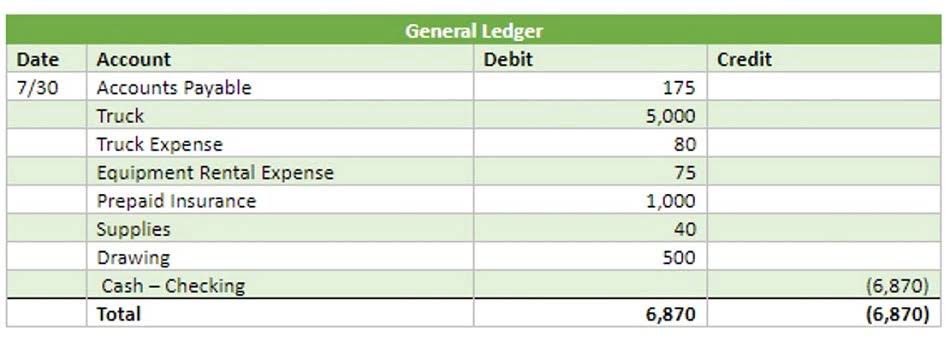
These accounts represent any tangible or intangible resources that a business owns that are expected to provide future economic benefits. Assets can include cash, accounts receivable, fixed assets such as buildings and vehicles, and other items that a company has invested in. They are used to record every financial transaction that a business makes, from buying inventory to paying employees. Accurately recording these transactions is essential for creating financial statements that accurately reflect the financial health of the business. Additionally, understanding debits and credits can help business owners make informed decisions about how to allocate resources and manage cash flow. In goodwill accounting it offers automation, record-keeping, and analytical capabilities.

Is goodwill an asset?
Liabilities, on the other hand, are the obligations that a company owes to others. In this blog post, we will explore the concept of goodwill in accounting, its importance, and how it is calculated under different circumstances. This feature ensures that all details related to goodwill – acquisitions, fair values, and adjustments – are readily accessible. This systematic approach aids in audits and strategic planning, reinforcing the integrity of your financial data. Goodwill, an intangible yet vital asset, can be challenging to track and manage.
What Does Goodwill Mean in Accounting? The Essential Features
- It is classified as an intangible asset on the balance sheet, since it can neither be seen nor touched.
- It’s usually listed under non-current assets or long-term assets, specifically as an intangible asset.
- In the balance sheet of AstraZeneca, goodwill should now be reported at $7.1 million after the adjusting entry above.
- The credit note shows the amount owed to the buyer and the terms of the refund.
- Goodwill can be calculated either through the purchase price of a company or through an impairment test.
- Determining the fair value of net assets and calculating goodwill requires assumptions and estimates, which can vary depending on the evaluator.
When you build goodwill with your customers, they’ll be more confident about doing business with you and are more likely to be loyal to your brand. As a result, your customers are more likely to QuickBooks contact you the next time they need a product or service you offer. Additionally, it is recorded when the purchase price of the target company exceeds the assumed liabilities of the company. Therefore, it helps in raising the overall revenue of the enterprise without any additional efforts & is recorded on the asset side of its balance sheet. It adds value by attracting more customers to buy the products or avail of the services offered by the entity.
Liability Accounts

Suppose ABC company has $100,000 in fair market assets and $50,000 in liabilities. According to our formula, ABC’s owners’ equity (or net worth) would be $50,000. In our example, the goodwill would be recorded as $50,000 ($100,000 in cash paid minus $50,000 in value).